
Permeable resin driveways and SuDS
A permeable resin bound driveway lets rain soak through the surface and into the ground, the way an open lawn does. That one property is what keeps it inside the drainage rules and, for most front gardens, out of the planning office.
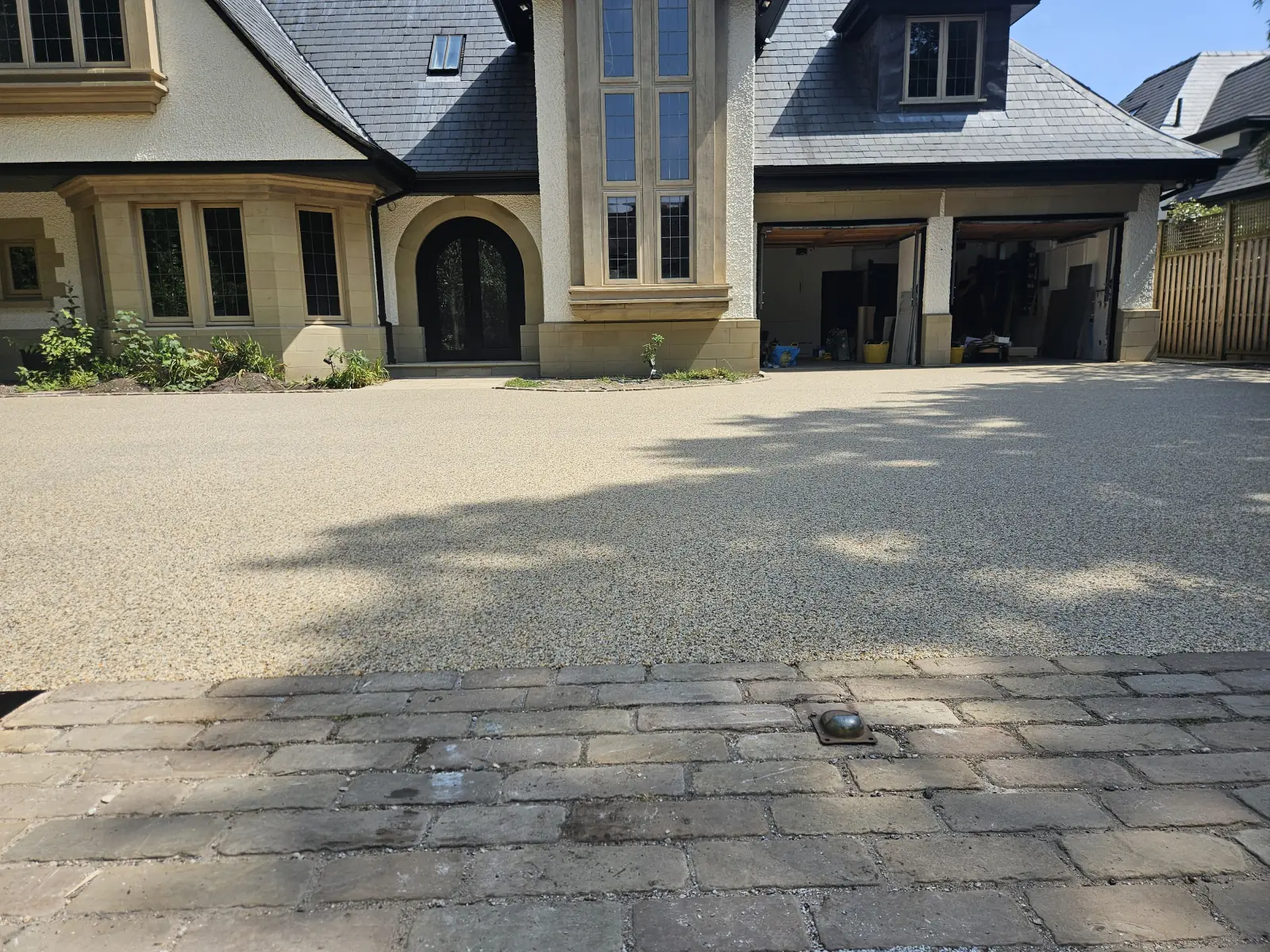
Are resin bound driveways permeable?
Yes. Resin bound is porous by design: the aggregate is coated in resin and trowelled on so that tiny channels stay open between the stones, and rain drains straight through rather than sheeting off to a gully. Laid over a free-draining base, the whole driveway behaves as one soft-ground surface.
The permeability is in the build, not the brand. Washed, kiln-dried aggregate is mixed with a clear polyurethane resin at a set ratio, then hand-trowelled to a smooth, even thickness. Because the mix is not flooded with resin, the surface keeps an open pore structure that passes water at a far higher rate than any driveway actually sees in a British downpour. Independent testing of resin bound systems routinely records flow rates well above the heaviest rainfall the Met Office measures.
That is the difference that matters for the rules below, and it is also the thing most often confused. A porous surface over a sealed concrete slab is not permeable, because the water has nowhere to go once it is through. Permeability is a property of the full system, from the wearing course down to the ground. We cover the two surfaces people mix up most in our guide to resin bound vs resin bonded, where only one of the two is porous.
What is SuDS, and why does it matter for a driveway?
SuDS stands for Sustainable Drainage Systems: an approach that deals with rainwater where it falls instead of piping it straight to the sewer. A permeable driveway is a small piece of SuDS, and front gardens add up. When thousands of them seal over, the extra run-off is a measurable cause of surface-water flooding.
The principle is simple. Rain that soaks into the ground is rain that does not arrive at a drain all at once. Spread across a street, permeable surfaces slow the peak, ease the load on an ageing sewer network, and let water filter through the sub-base rather than carrying grit and oil into a watercourse. The approach is set out in CIRIA's SuDS Manual (C753) and in the government's non-statutory technical standards for sustainable drainage.
For a homeowner the point is practical as much as civic. A driveway that drains in place needs no soakaway crate, no run of channel drain, and no connection to the surface-water sewer, which removes both a cost and a point of failure. Rain does not pool at the threshold in winter, and there is no slick film of standing water to freeze overnight.
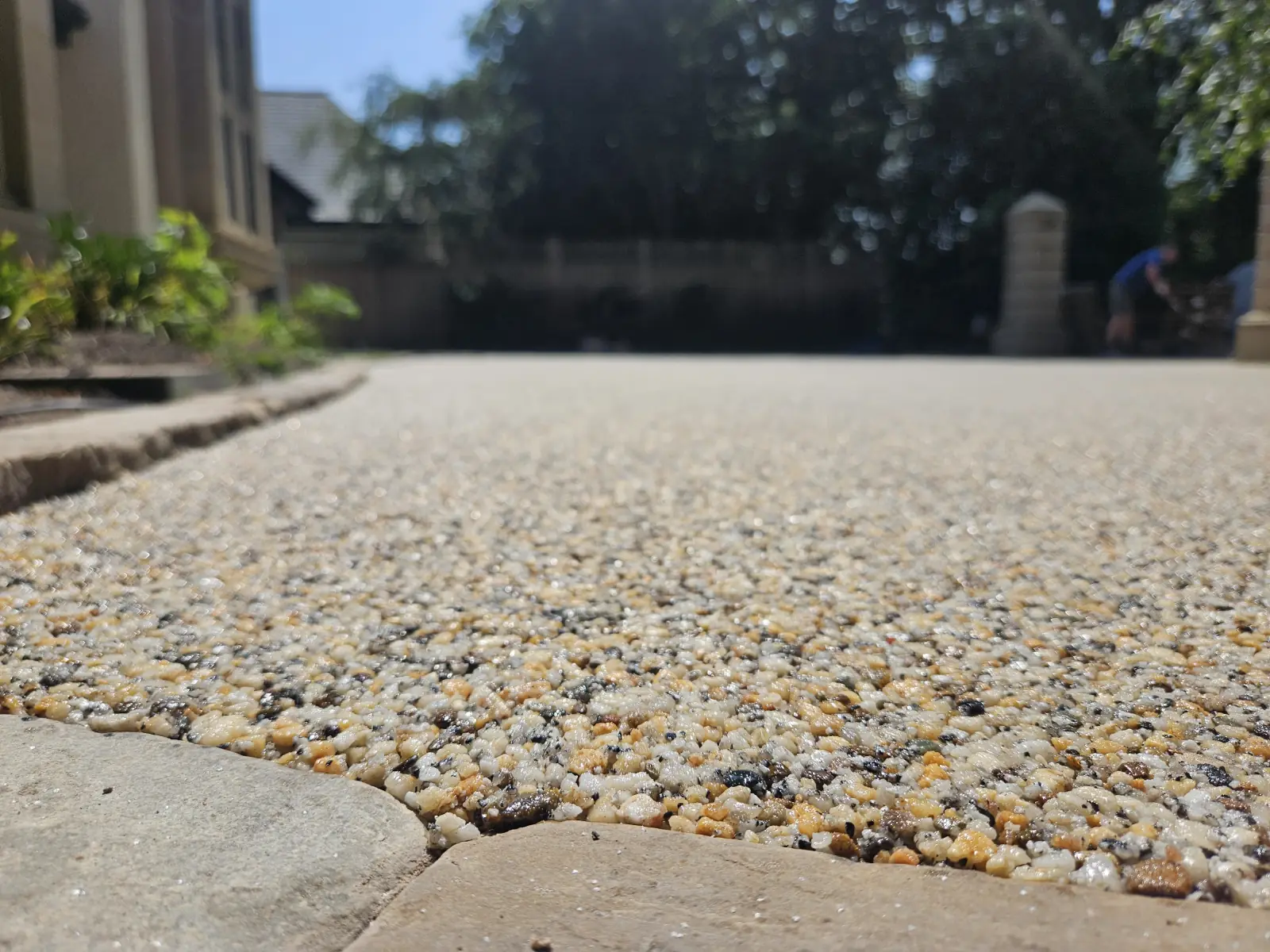
Do you need planning permission for a resin driveway?
In most cases, no. Government permitted-development rules let you lay a new or replacement front driveway of any size without planning permission as long as the surface is permeable, or the rainwater is directed to a permeable area such as a border or lawn. A sealed surface over five square metres out front is the case that does need an application.
The rule dates from a 2008 change to permitted development, brought in exactly because paved-over front gardens were adding to flood risk. Because a permeable resin bound driveway drains through its own surface, it sits on the right side of that line by default, whatever its size. The detail, and the official wording, is on the Planning Portal's guide to paving your front garden and in the GOV.UK guidance on the permeable surfacing of front gardens.
Two cases where you should still check
- Listed buildings and conservation areas. Permitted development is restricted or removed in some locations, so confirm with your local planning authority before work starts.
- A new dropped kerb or vehicle crossover. Creating or widening access onto the public highway is a separate consent from your council's highways team, whatever the surface is made of.
None of this is legal advice. We lay to the permeable standard that keeps a normal front driveway inside permitted development, and we are glad to talk it through at the survey.
How does a permeable resin driveway actually drain?
Water passes through the resin bound surface, then down through an open-graded, free-draining sub-base that both carries the load and holds water while it soaks away into the ground. Every layer is chosen to let water move, so the whole build works as one drainage path from the top stone to the subgrade.
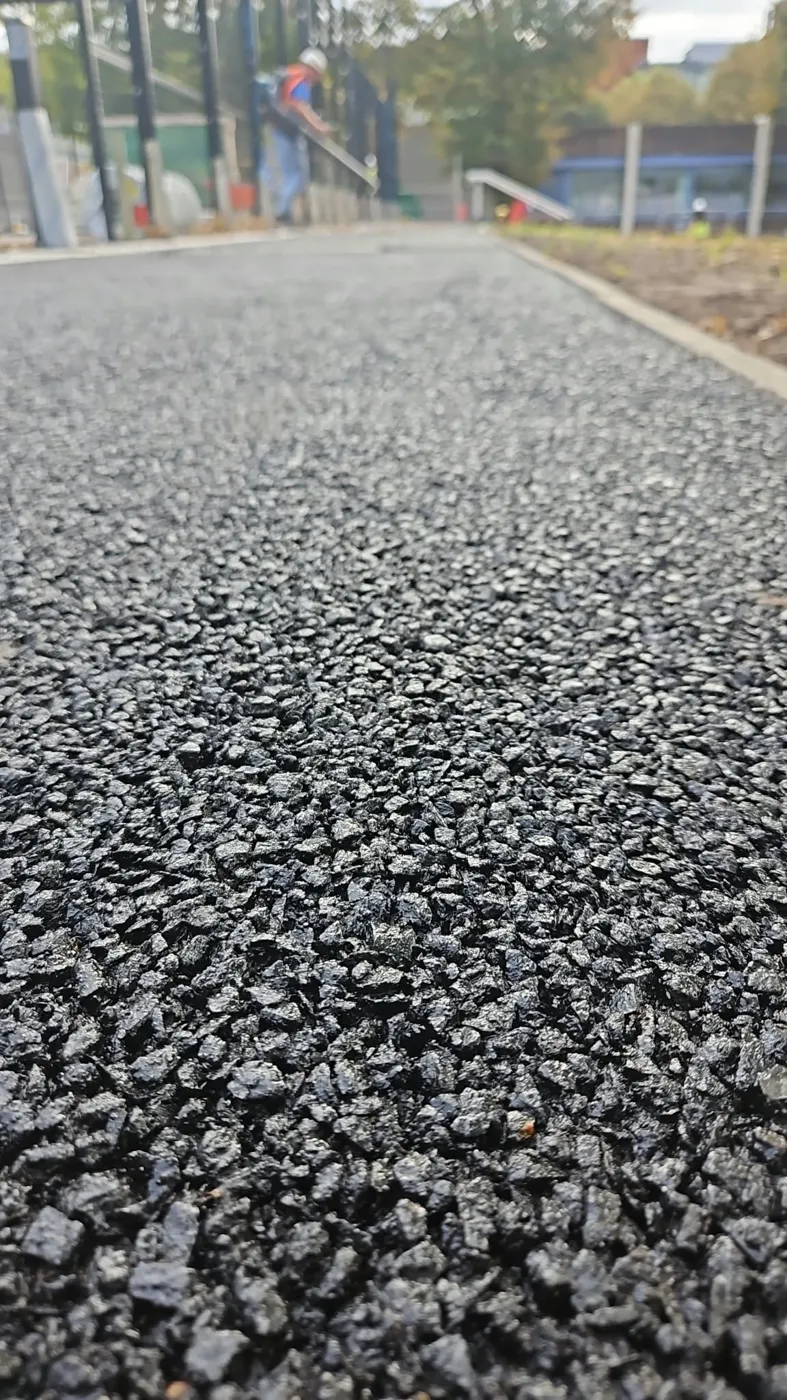
A sealed driveway relies on falls and a drain to move water sideways. A permeable one lets it travel down instead, which is why the layers underneath matter as much as the finish on top. The wearing course is the porous bit you see. Below it, an open-graded base, commonly a clean, single-sized stone or MOT Type 3 rather than a close-packed Type 1, keeps voids open so water can pass and sit without turning to sludge.
A geotextile separation layer keeps the sub-base and the ground from mixing, so the voids stay open for the life of the drive. On ground that drains slowly, the sub-base is built deeper to act as a reservoir, releasing water gently into the subgrade rather than all at once. The exact depths come from what we find at the survey, which is why we never quote a build blind.
Does it meet the paving and front-garden regulations?
Built as a full permeable system, yes. The front-garden rules are concerned with where rainwater ends up, and a permeable resin bound driveway deals with it on the plot instead of pushing it onto the pavement or into the sewer. The surface does the job the regulations were written to encourage.
The regulations do not name a product; they describe an outcome. A surface either lets water through to a permeable area, or it sends run-off somewhere it can soak away, or it fails the test and needs permission. A properly built permeable drive meets the first of those by construction, which is the whole reason it has become the default choice for a compliant front driveway. The two official sources, the Planning Portal and GOV.UK, set out the same outcome in plain terms.
Compliance lives in the build rather than the sales line. A porous surface laid over a sealed base, or over a sub-base so compacted that water cannot move, is not a SuDS driveway whatever it looks like. That is why our spec runs an open-graded base all the way down and why we record what we lay. You can see the same thinking in how we approach resin bound driveways across the board.
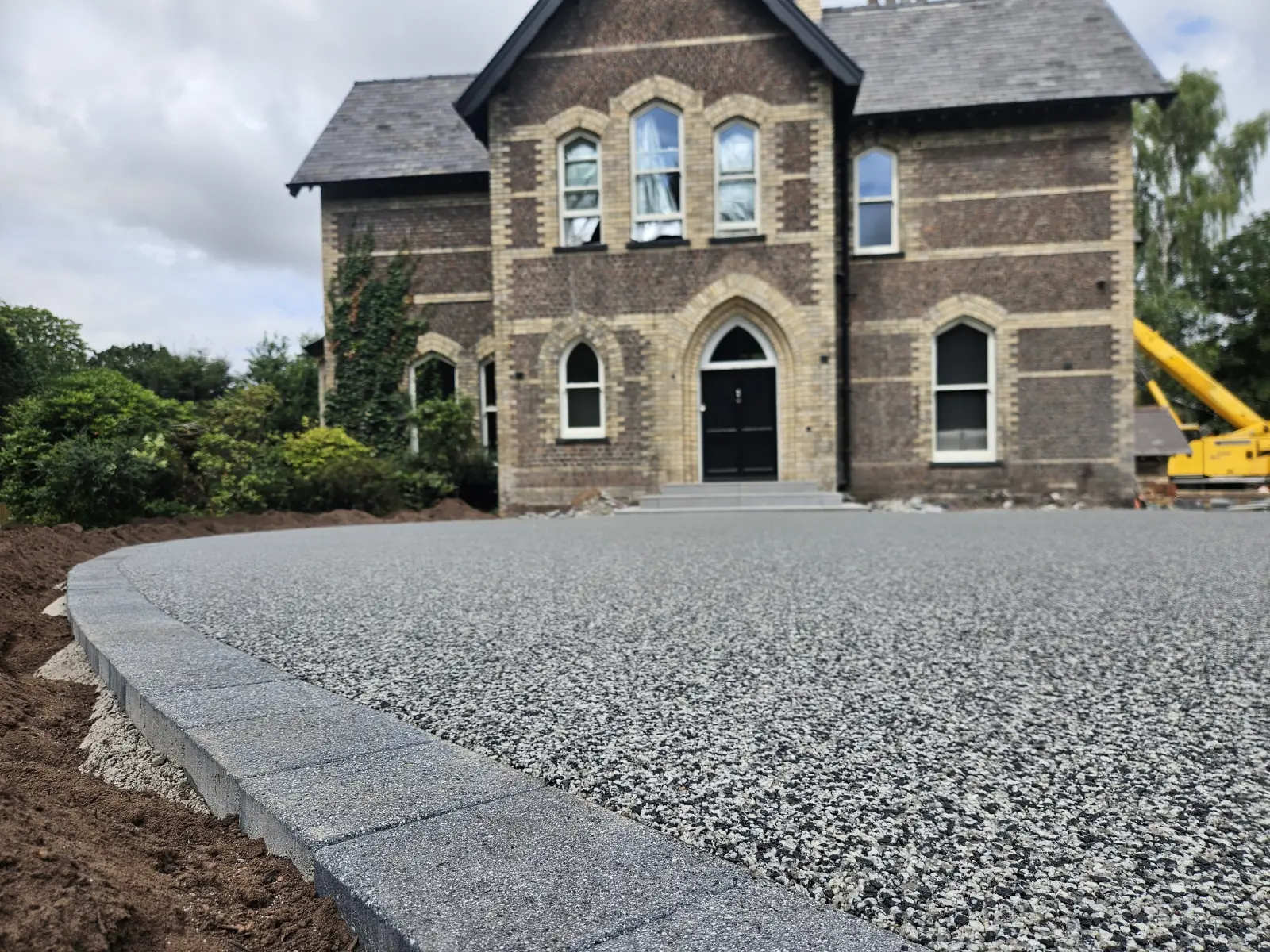
Permeable resin bound vs other permeable surfaces
Resin bound is not the only way to drain a driveway in place, but it is the one that stays smooth, holds its colour and keeps the stones where you put them. Gravel, permeable block and porous asphalt each drain too, with their own trade-offs in looks, upkeep and feel underfoot.
The honest summary is that all four can satisfy the drainage rules if they are built correctly. Where resin bound pulls ahead for a front driveway is the day-to-day: no loose stone to kick onto the path, no weed-filled joints, and a surface you can brush and rinse. For the plainer question of what each option costs to lay, our resin driveway cost per square metre guide puts real figures beside the alternatives.
How we build a compliant permeable system
We build the drainage from the ground up: assess the subgrade, lay an open-graded sub-base deep enough for your soil, separate it with a geotextile, then trowel the resin bound wearing course over a free-draining base course. The surface you see is the last layer of a system designed to move water; the layers beneath it do just as much.
- Survey and ground assessment. We look at what is under the old surface and how freely your ground takes water, which sets the sub-base depth and the build. This is also when any dropped-kerb or conservation-area question gets flagged.
- Excavate and prepare. The old surface comes up to the depth the build needs, edges and restraints go in, and the formation is cut to the right falls.
- Open-graded sub-base and membrane. A clean, free-draining stone is laid and compacted over a geotextile, giving load capacity while keeping the voids open for water.
- Permeable base and resin bound surface. A free-draining base course takes the wearing layer, then the resin and aggregate are mixed on site and hand-trowelled to a smooth, even finish that cures as one porous surface.
A resin bound driveway laid this way typically starts from around £50 per square metre, though a full dig-out on poor ground costs more than laying a permeable build over a sound base. Indicative only. Your real figure comes after a free site survey, once we have seen what is under the old surface. When the driveway is down, it drains in place and asks very little back: the everyday care of a resin driveway is mostly a brush and the occasional rinse.
Get a permeable driveway priced properly
Book a free site survey. We will check your ground, confirm the permeable build your front garden needs, and give you a firm quote with no obligation.